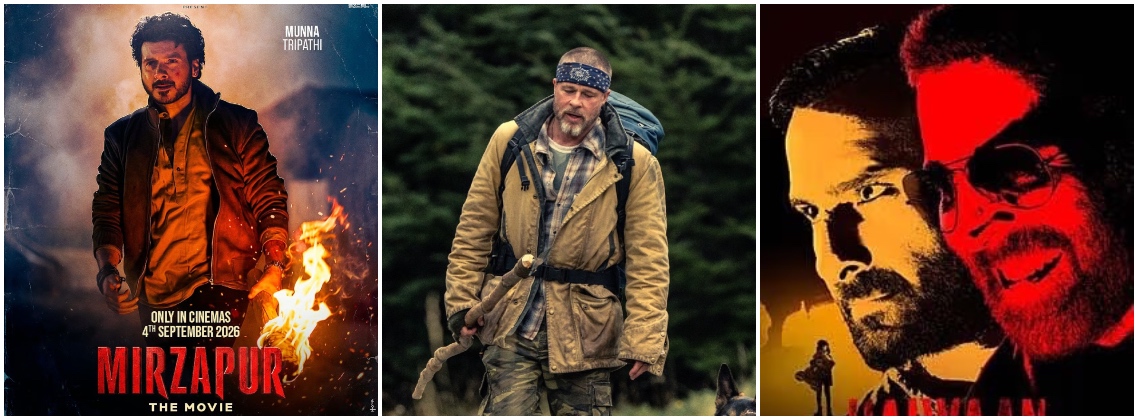
The boundaries between regional cinema and Hindi cinema have never been thinner. What was once considered a crossover has now become the norm, with actors, directors, producers and technicians increasingly collaborating across industries to tell stories that resonate with audiences nationwide.
Over the past few years, stars like Prithviraj Sukumaran, Fahadh Faasil, Vijay Sethupathi, Yash and Rashmika Mandanna have seamlessly moved between languages, proving that compelling performances transcend linguistic barriers. The shift is no longer about a South actor entering Bollywood or a Hindi actor venturing into regional cinema—it’s about bringing together the right talent, regardless of industry, to serve the story. Several upcoming films continue this trend with exciting cross-industry pairings.
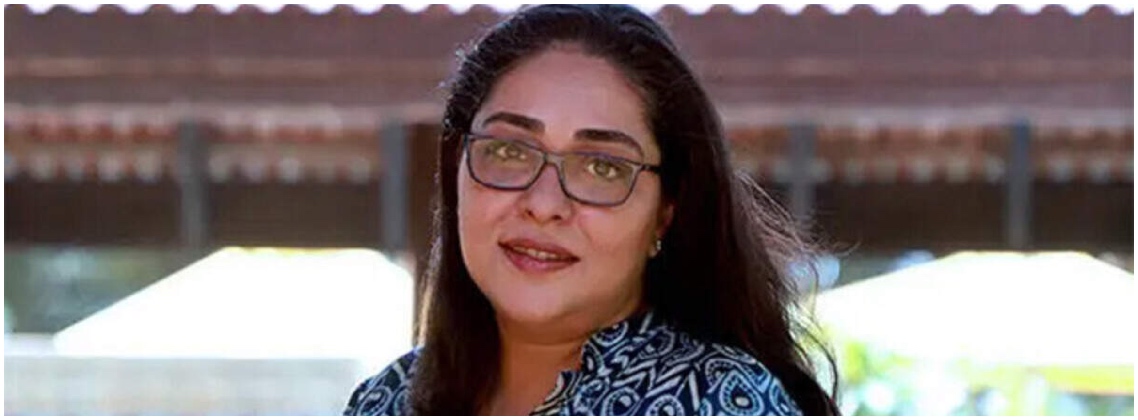
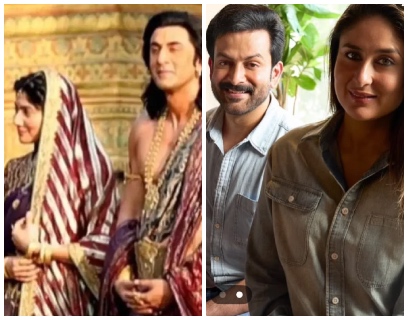
Daayra brings together Kareena Kapoor Khan and Malayalam superstar Prithviraj Sukumaran for the first time. Directed by Meghna Gulzar, the crime thriller has already generated significant buzz, with audiences eager to see the two acclaimed performers share screen space in a story inspired by true events.
Toxic marks the much-anticipated collaboration between Kannada superstar Yash and Kiara Advani. Positioned as a pan-India action entertainer, the film reflects how casting today is driven by ambition and scale rather than language.
Ramayana: Part 1 unites Ranbir Kapoor and Sai Pallavi, bringing together one of Hindi cinema’s biggest stars with one of the most celebrated actors from South Indian cinema. Their pairing has become one of the film’s biggest talking points ahead of its release.
Spirit pairs Telugu superstar Prabhas with Triptii Dimri, another collaboration that underscores how filmmakers are increasingly looking beyond traditional industry boundaries to create fresh on-screen dynamics.
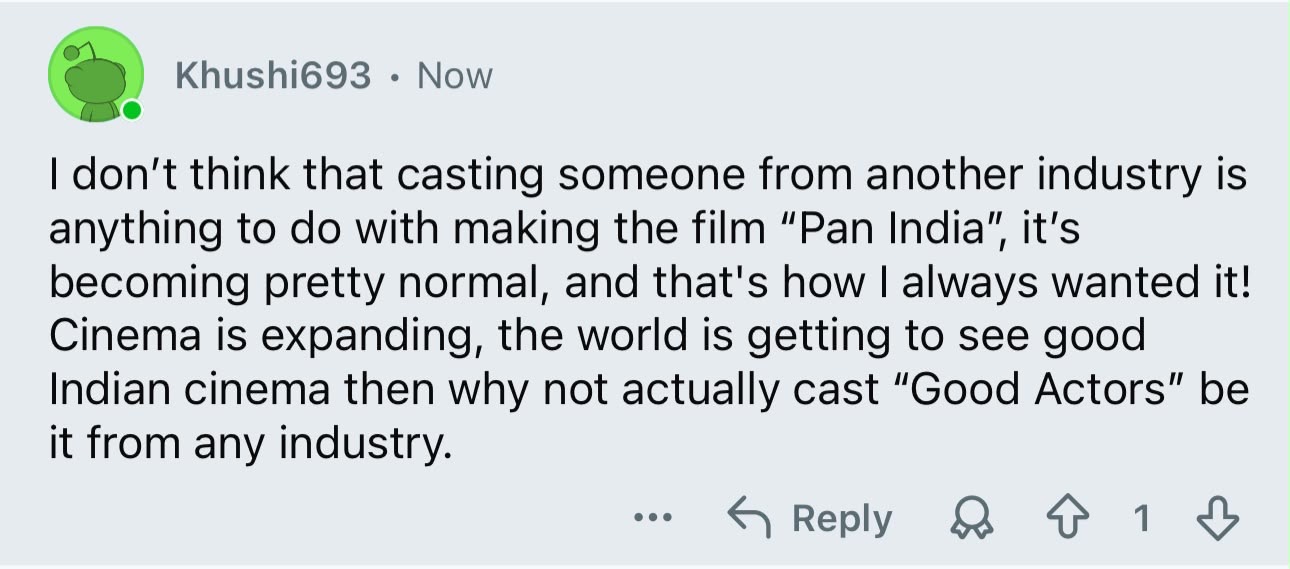
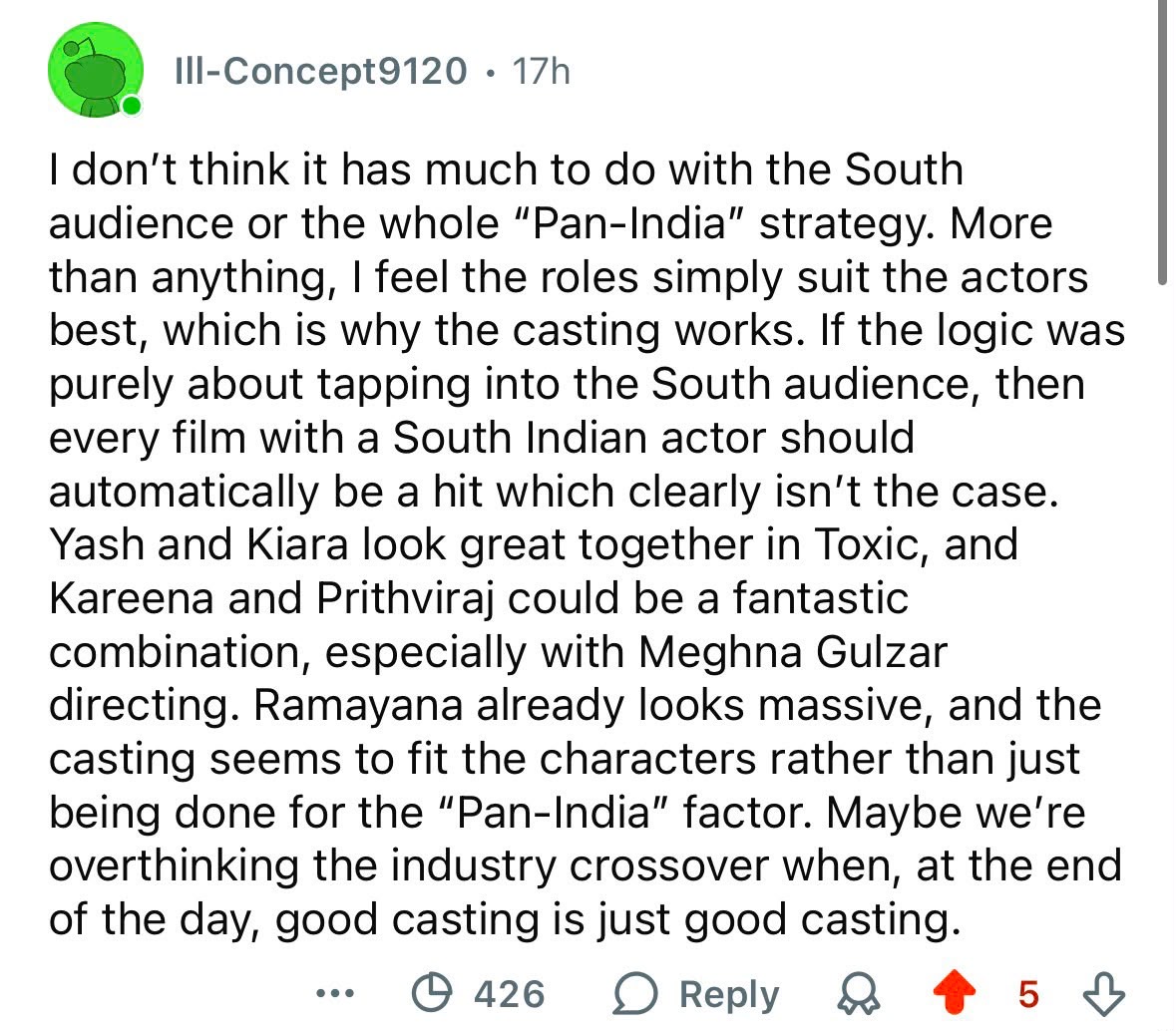
Interestingly, the conversation around these cross-industry pairings is already spilling onto Reddit, where a post discussing the upcoming collaborations has been gaining traction among moviegoers. One commenter summed up the shift in casting trends, writing, “Cinema is expanding, the world is getting to see good Indian cinema then why not actually cast ‘Good Actors’ be it from any industry.” Another echoed the sentiment, pointing out that these choices work because “the roles simply suit the actors best,” adding that “at the end of the day, good casting is just good casting.”
These collaborations reflect a larger transformation in Indian cinema. Audiences today are embracing stories irrespective of language, while filmmakers are assembling talent from across the country to create films with wider appeal. As pan-India storytelling continues to evolve, collaborations between Bollywood and the South are no longer the exception, they are shaping the future of Indian cinema.